By: Staff Writer
September 1, 2026
The Caribbean faces multiple threats to coral reefs and is listed as the region with the second worst impacted area for coral decline a new report said.
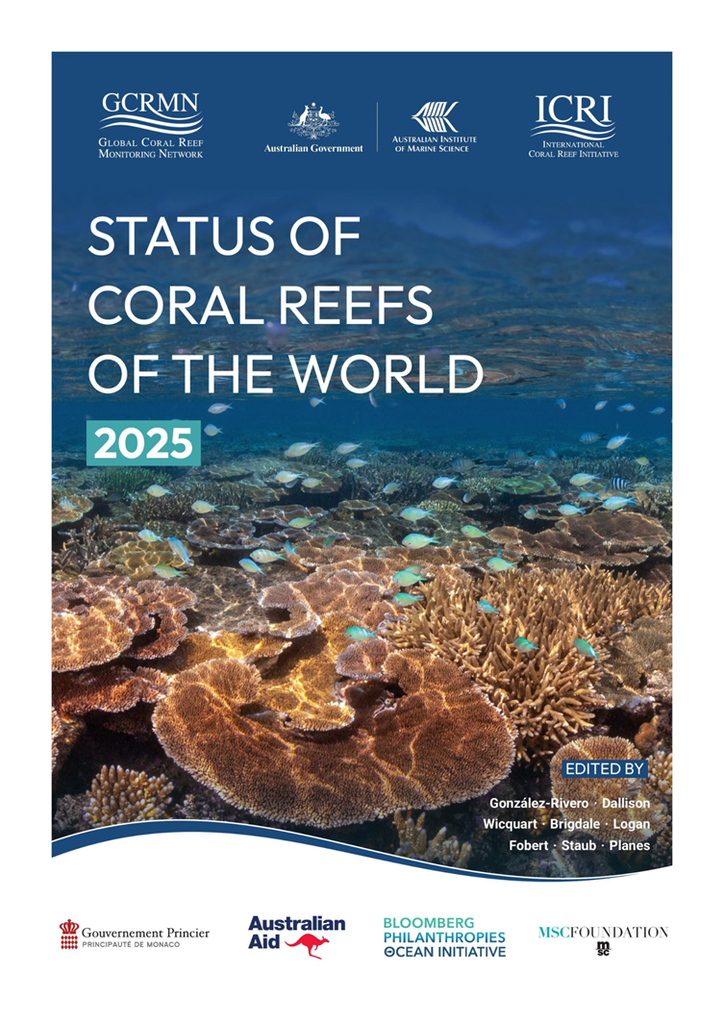
The Global Coral Reef Monitoring Network in their report, Status of Coral Reefs of the World 2025, revealed that threats to Caribbean coral reefs include heat stress, hurricanes, diseases, coastal development, unsustainable fishing, sargassum and invasive species.
A map outlining the changes in hard coral cover by region shows the Caribbean as the second worst impacted area for coral decline, with -43.4%, after the Regional Organization for the Protection of the Marine Environment (ROPME) Sea Area in the Middle East, with -48.7%.
The report first noted that major heatwaves in 1987, 1995, 1998, 2005, 2010, 2015–2017, 2019–2020, and 2023–2025 caused bleaching of varying extent. The 1998 event had regionwide impacts (especially severe in the Bahamas), while later events showed spatial variability: 2005 affected the Greater Antilles and Eastern Caribbean, 2010 the Southern Caribbean, and 2015–2017 the Gulf of Mexico and Western Caribbean.
In the Caribbean region, cyclones are known as hurricanes. Increasingly intense hurricanes have contributed to declines in Caribbean reef structural complexity and coral cover. Between 1980 and 2025, 180 hurricanes passed within 100 km of reefs. Hurricane intensity has increased in recent decades, particularly after 2005, likely linked to climate change
Rapid coastal population growth, tourism, and infrastructure expansion since the 1980s have intensified pressure on Caribbean reefs. Resort and port construction have caused direct damage while increasing sedimentation and nutrient inputs.
Agriculture, deforestation, and inadequate wastewater treatment have elevated nitrogen and phosphorus runoff. Major rivers, including the Magdalena, Amazon, Orinoco, and Mesoamerican river systems, contribute to sedimentation and eutrophication.
Pollution has also increased, with plastics dominating marine debris and chemical residues accumulating in reef environments, further degrading water quality and coral health.
Fishing pressure has intensified over time, depleting predatory fish such as groupers and snappers and collapsing spawning aggregations. In response, over 70% of Caribbean fisheries nations now harvest parrotfish species, a key group of herbivores, disrupting food webs and enabling the growth of macro- and turf algae. Invertebrate fisheries targeting spiny lobsters and queen conch are also heavily exploited, often including illegal harvest.
Since 2011, the Caribbean coral reefs are experiencing a new, potentially irreversible, regime shift triggered by the massive recurring influx of Sargassum fluitans and S. natans. These massive influxes are characterized by reduced light availability, severe hypoxia, localized water acidification, and the release of toxic leachates and gases. In this new regime, mass mortalities of marine organisms are more frequent, resetting their ecological succession under lower recruitment conditions, and negatively affecting human health.
Invasive species such as lionfish (Pterois spp.) and invertebrates like Unomia stolonifera, Xenia umbellata and Latissimia ningalooensis have also spread widely across Venezuelan, Puerto Rico and Cuban reefs, outcompeting native species and altering reef community structure and ecosystem function.