
By: Shantae Porter
April 24, 2026
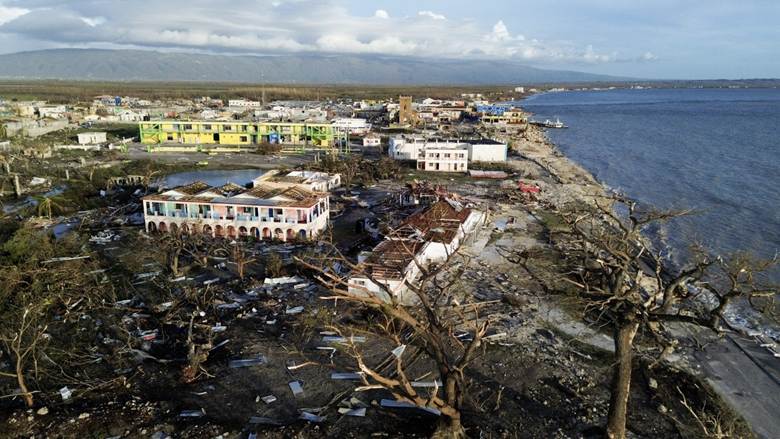
Months after Hurricane Melissa tore through western Jamaica, the debris has been cleared and roofs patched. But for thousands of survivors across Westmoreland, Hanover, St. James, and St. Elizabeth, the real storm is still raging.
The winds are gone. Floodwaters have receded. Broken zinc has been replaced, walls replastered, and roads cleared.
But long after the storm passed, something far more stubborn remains. Across western Jamaica, trauma lingers, unseen, but deeply felt.
It lives in the way a woman flinches when rain begins. In the nightmares of a child who cannot understand why the sound of wind still fills him with dread. In the young man who stood at the threshold of his own home and could not bring himself to walk back inside.
For many, recovery did not end when the skies cleared. It simply changed form.
In Llandilo, Westmoreland, Jorvian Lewis described the weeks following the storm:
“I kept having flashbacks. My community was a reminder every single day… The wind sounded like absolute destruction. I thought it was the end.”
In Hanover, Sarah Barham said the fear surfaces in ordinary moments.
“Even now, when the rain starts or the wind picks up, I feel uneasy. You try to move on, but it is not something you just forget.”
According to Romain G. Stewart, associate counselling and educational psychologist and owner of Mind Measures & Counselling in St. James, experiences like these are common after disasters.
“Post-traumatic stress disorder… people think it is only associated with things like rape or being held up, but it can also happen through natural disasters,” he said.
He explained that triggers such as rain, darkness, and strong winds often reactivate fear.
“Some persons experience flashbacks when it rains. They think it is Melissa coming back. Especially when the lights go out, the fear returns. There are nightmares, avoidance. Some people can’t even go back into their own homes.”
In White Hill, St. Elizabeth, Duranie James said the storm reshaped his relationship with home. “It affected me by breaking me down. Seeing a place I once called home being torn apart. I felt lost.”
The loss of basic necessities made recovery even harder. “The roof was gone. My bed had to be thrown away. There was always that fear of being soaked again.”
He paused before adding, “But now that the roof is back up, I am doing better. Things are looking good again.”
Stewart warned that without intervention, these experiences can deepen.
“There are changes in sleep, eating, and mood. If not addressed, it can lead to anxiety disorders, depression, or serious adjustment disorders.”
Despite the growing need, access to mental health care remains limited.
“The public system does not have enough psychologists, and many persons cannot afford private care. So, some are going untreated,” Stewart said.
He added that stigma continues to discourage people from seeking help, particularly among men and older Jamaicans.
“Some people still feel mental health is something to hide. But it is real.”
While services such as mental health hotlines, community health centres, and referral systems exist through the Ministry of Health and Wellness, damage to facilities and limited rural resources have made access inconsistent.
INSIDE THE CLASSROOM: SCHOOLS ON THE FRONT LINE
At Black River High School in St. Elizabeth, the effects of the storm continue to shape students’ lives.
“Most of the students’ houses were destroyed,” Said Mr. James a representative from the Student Affairs Department. “They can’t get their School-Based Assessments done because they have no homes, no internet. That has affected them enormously, both academically and mentally.”
The school responded with psychosocial support sessions and a mental health fair, bringing in professionals to meet students where they were. To address digital barriers, the school installed a Starlink satellite internet system and arranged laptop loans.
Still, recovery remains uneven. “Students are still suffering from the hit of Melissa… a lot of them are still recovering mentally,” the representative said. “Some are still suffering.”
THE CHURCH AS SHELTER
For many survivors, churches became spaces of refuge in the absence of formal mental health services.
Pastor O’Shane Whyte of the Contented Hall District of Churches in Westmoreland described the immediate aftermath:
“It was complete and utter destruction. People had no shelter, no comfort, nothing.”
Months later, the emotional toll remains visible, especially among children.
“Just the sound of wind makes them think Melissa is coming back,” he said.
In those early days, survival took priority over emotional processing.
“They just had to survive. Nobody had time to feel anything.”
While churches provided space for people to talk, cry, and support each other, Whyte acknowledged their limitations.
“Not even pastors are fully trained in counselling. We need professionals.”
VOICES FROM THE PARISHES
In Balaclava, a senior citizen said her faith helped her endure the storm.
“It was traumatizing during Melissa, but things got a little better by God’s grace.”
Still, fear lingers. “I still feel a bit nervous when it rains or when there is heavy wind.”
She also questioned the structure of recovery support.“They give vouchers for hardware. But what about those who already rebuilt before the vouchers came? I think they should give the money instead.”
In Paradise, Westmoreland, Davian Dillan described the aftermath in a single word: “Miserable.” “Seeing my neighbour’s house being destroyed, and her standing in the water, looking at it,” he recalled.
Beyond homes, livelihoods were lost. “Fishermen lost their boats, their pots, their way of life.”
THE UNSEEN DAMAGE
Agencies including the Office of Disaster Preparedness and Emergency Management (ODPEM) and the Ministry of Health and Wellness continue to stress that rebuilding infrastructure is not enough.
Recovery must also address what cannot be photographed, the psychological impact.
Experts, community leaders, and residents are calling for expanded counselling services, stronger school-based psychosocial programmes, and improved access to care in rural communities.
Across western Jamaica, reconstruction continues. Walls are going up. Roofs are returning. The physical landscape is slowly being restored.
But for many, the real recovery is quieter, unfolding day by day. “Even now, when the rain starts, I still feel it,” Barham said.
For many survivors, Hurricane Melissa is no longer just a past disaster. It is something they are still learning to live with.